Choosing Custom Packaging is not simply a design decision. It affects shipping costs, product protection, customer experience, and how clearly your brand stands out. The right solution depends on your product’s weight, fragility, dimensions, sales channel, and order volume. A glass candle needs a different insert from a folded T-shirt. Even a small sizing mismatch can leave products sliding in transit or force you to pay for unused space.
Industry research offers useful context, but it should not replace testing. McKinsey’s 2020 US consumer survey on sustainable packaging found that 60% of respondents said they would pay more for sustainable packaging. Trivium Packaging’s 2023 Global Buying Green Report also reported strong consumer interest in sustainable packaging. These findings suggest that material choices can influence perception. They do not prove every customer will pay more. Survey intentions are not the same as purchases. That distinction matters.
A practical choice balances appearance with performance. Compare material strength, print quality, minimum order quantities, storage needs, and total landed cost—not just the unit price. Request samples, pack a real product, and test the fit before approving a large run. A neat, sturdy mailer can make a better impression than an elaborate box that adds weight and cost. There is no perfect box. Your first design may need revision, and that is normal. The goal is packaging that protects the product, supports your brand, and makes sense for your customers and operations.
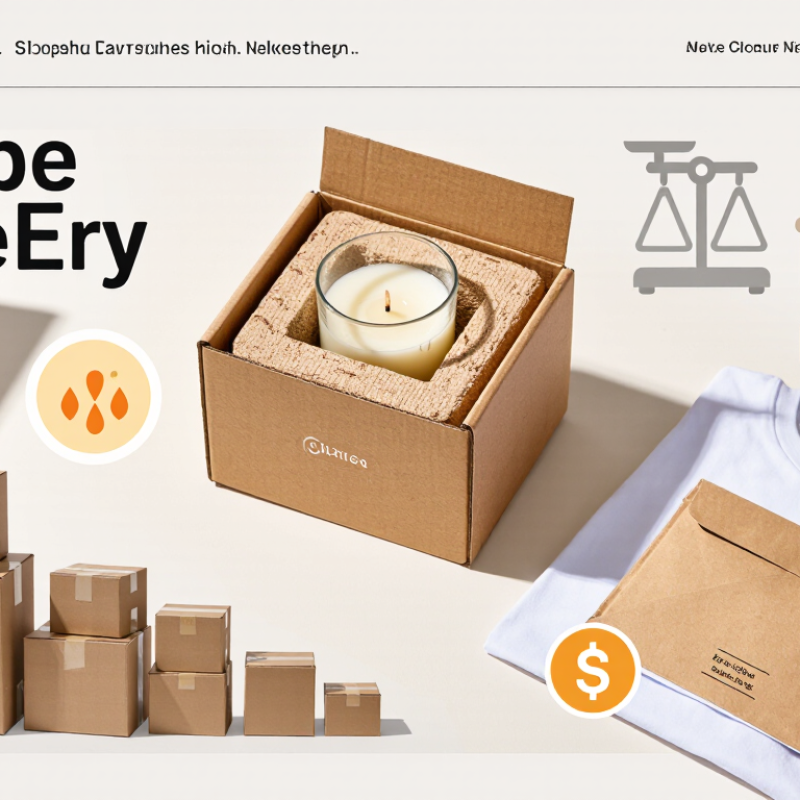
Define Product, Storage, and Shipping Requirements
Before choosing a custom package, define the product’s real-world needs. Record its weight, dimensions, fragility, and sensitivity to moisture or heat. A glass jar may need a snug insert, while a soft garment may only need a mailer. Fit matters. Oversized cartons waste storage space and can let products shift in transit. Check how packages stack on shelves and pallets, too; a design that works individually may become unstable in a tall stack.
Shipping conditions matter just as much. The U.S. Census Bureau reported that e-commerce accounted for 16.1% of U.S. retail sales in the fourth quarter of 2024. That means many products must withstand parcel handling, not just a smooth delivery van ride. The 2023 Parcel Shipping Index reported 161 billion parcels shipped worldwide in 2022, and projected 256 billion by 2027. Test a filled package for drops, vibration, and compression. A carton can look sturdy on a desk and still fail at a corner.
Storage needs can change the right choice. Measure available warehouse space, expected inventory, and how packaging arrives: flat, nested, or pre-assembled. If stock sits for weeks, consider humidity and whether printed surfaces scuff when boxes rub together. I’d test a small batch before committing to a large order. No test reproduces every route, and teams sometimes overprotect light products. Compare damage risk, packing time, and storage volume—not material cost alone.
How to Choose the Right Custom Packaging for Your Business? — Define Product, Storage, and Shipping Requirements
| Product Type | Typical Product Size | Product and Storage Requirements | Shipping Risks | Packaging Considerations |
|---|---|---|---|---|
| Glass skincare bottle | About 5 × 5 × 14 cm; 30–100 ml | Protect from impact, leakage, and prolonged exposure to heat or direct sunlight. Keep closures secure. | Breakage, cap loosening, and leakage during handling or transit. | Use a snug carton insert or molded paper support, a leak-resistant inner seal, and an appropriately sized corrugated shipping box. |
| Folded cotton T-shirt | About 25 × 20 × 3 cm per folded garment | Keep clean and dry; protect from dust and moisture. Avoid unnecessary packaging volume. | Moisture exposure, scuffing, and excess dimensional weight from oversized packaging. | Consider a paper sleeve or protective mailer for individual orders. Use a compact carton for multiple garments or when presentation matters. |
| Ceramic mug | About 10 × 10 × 11 cm | Prevent contact between the mug and other hard objects. Store cartons in dry conditions and avoid excessive stacking loads. | Cracking, chipped edges, and damage from movement inside the parcel. | Use a fitted divider or cushioning around the mug, protect the handle, and leave enough clearance inside a strong corrugated box. |
| Dry food in a resealable pouch | About 15 × 8 × 22 cm; 250–500 g | Maintain a sealed, food-contact-safe primary package. Follow product-specific requirements for moisture, oxygen, light, and temperature control. | Punctures, seal failure, moisture ingress, or crushing in transit. | Choose a barrier pouch suited to the product and a shipping carton that limits compression. Confirm food-contact suitability and applicable labeling requirements. |
| Small electronic accessory | About 12 × 8 × 4 cm | Keep components organized and protected from dust, moisture, and electrostatic discharge when the item requires it. | Impact damage, component movement, and electrostatic discharge for sensitive electronics. | Use a fitted tray or compartmentalized insert. Add an appropriate antistatic bag for sensitive components and select a close-fitting outer carton. |
| Paperback book | About 15 × 2 × 23 cm | Store flat or upright without bending; protect from dampness and abrasion. | Dog-eared corners, bent covers, and moisture damage. | Use a book wrap or snug mailer with corner protection. For multiple books, prevent movement and use a suitably strong carton. |
FAQS
Ask whether they value easy opening, product protection, clear instructions, or a thoughtful unboxing. Test a sample with real customers. A neat box can still frustrate someone.
Match the material to the product and shipping journey. Paperboard suits lightweight items, while corrugated boxes can cushion heavier or fragile goods. Flexible mailers save space but may crush rigid products.
Fit the package closely, then test it with the actual product inside. Shake the parcel and check for movement or scuffs. Less filler is not always better.
Use a production-like sample with the actual product, inserts, and seals. Check its fit, closure, and handling. Small details matter. A loose insert may shift during transit.
Consider suitable drop, vibration, or compression tests. Record damage, movement, and opening effort. One test cannot represent every shipping condition.
Confirm finished dimensions, tolerances, board grade, thickness, strength rating, material layers, print colors, and closure type. Compare the delivered sample with those details using a ruler or caliper.
No. One consumer survey reported an average willingness to pay 9.7% more for sustainably produced or sourced goods. That signals interest, not a purchase promise.
Choosing packaging before checking the final shipping size can cause trouble. Measure the packed dimensions early. Fixing them later may mean redesigning the whole package.
Ask for evidence behind recyclability claims, and question whether every layer is necessary. A lighter package is not automatically suitable. Protection still matters.
Conclusion
Choosing the right Custom Packaging starts with a clear understanding of what the product needs. Consider its size, weight, fragility, storage conditions, and the demands of shipping. These details help determine the level of protection and the packaging format that can keep the product secure from preparation through delivery. It is also important to consider what customers expect when they receive and open an order, along with the impression the packaging should create for the business.
Next, compare suitable materials and formats, weighing protection, appearance, cost, and environmental considerations. Explore practical customization options, such as dimensions, colors, and printed information, while keeping production quantities and budgets in mind. Before placing a larger order, request samples and test them under realistic packing, storage, and shipping conditions. Confirm the final specifications with the supplier, including measurements, materials, print details, and quality expectations. A thoughtful selection process helps create packaging that serves the product, supports the brand’s goals, and provides a reliable customer experience.